By JanetDParker March 27, 2026
The problem retailers in Lancaster face is that card processing costs are increasing. This is especially true as more people are using cards, contactless cards, and mobile wallets. This has meant that a higher percentage of their revenues is going into processing fees. The initial instinct of any retailer facing this problem is to change its entire POS system. However, this may not be the case.
Most retailers already have the necessary tools; they are just not using them properly. The answer lies in understanding the process of payment processing and making the necessary changes to reduce costs without affecting the overall efficiency of the operations. Reducing costs does not mean compromising on the overall customer experience. This can be done by improving the way transactions are handled, the way the system is set up, and the way data is used.
Table of Contents
Why Card Fees Keep Increasing
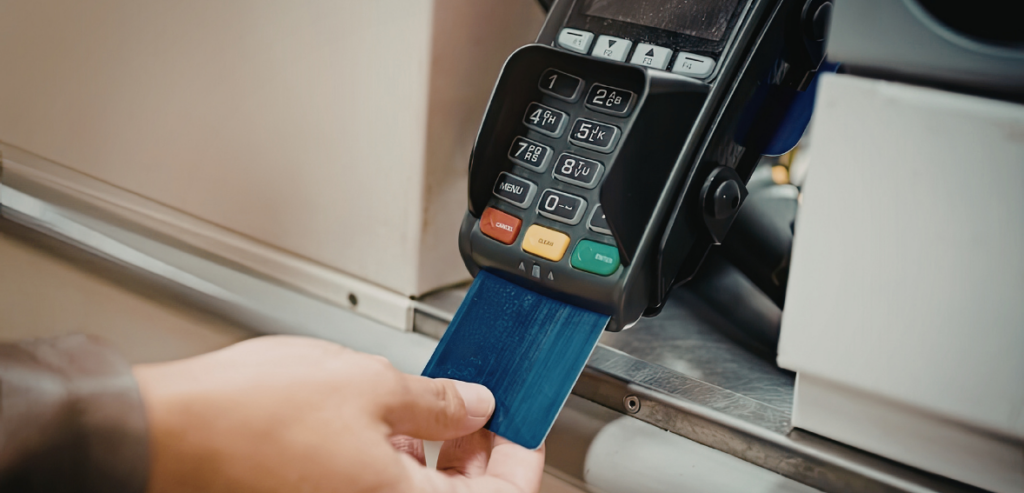
Card fees don’t usually increase dramatically. Instead, the increase is gradual, with minor changes in interchange rates, network fees, and processor markups. This has the effect of increasing the card fees over time, especially for merchants with high volume. The increase in card fees is not immediately apparent to the retailer. This is because the card fees are not seen as a standalone entity in the day-to-day operations of the business.
However, if the card fees are looked at over time, the difference is apparent. The other factor that contributes to the increase in card fees is the changing behavior of the customer. With the rise of the use of credit cards instead of cash, there has also been the rise of certain types of cards, especially rewards cards. This has the effect of increasing the card fees, regardless of the volume of the business.
Understanding How Payment Processing Works
Before you consider cutting your fees, it’s essential to first understand what these fees mean. Processing transactions involves involved players: the issuing bank, the card network, and the processor. All these players take their share of the money. Interchange fees, as dictated by the card networks, normally constitute the bulk of these fees. These interchange fees differ according to various factors such as card type, transaction type, and even data quality.
Processor markups are those that businesses can control in large measure. These markups differ significantly. Most businesses do not understand how these different components of transaction processing function. Without this understanding, it is hard to determine how you can save money without having to completely change your system.
You Don’t Need a New POS System
One of the biggest misconceptions is that to reduce fees, you have to replace your POS. That’s not necessarily true. Optimized payment processing is already available in modern POS systems. The problem is often how they’re being used or how they’re interfacing with payment providers.
Replacing a POS is not only costly, but it’s often not worth it. With a new POS, you’ll have to retrain staff and potentially reconfigure workflows. That cost may not be justified by reduced fees. The key is to optimize what you already have. Even small adjustments can yield big savings.
POS Optimization Makes a Bigger Difference Than You Think
One of the best ways of minimizing the cost of processing is through POS optimization. This is the process of ensuring that your system is set up in the best way to achieve the lowest interchange rates.
It entails ensuring that all the data fields are provided in the transaction, using the correct type of transactions, and also ensuring that the transactions are processed promptly. It is important to note that failure to do this can result in the transactions being downgraded to the next level.
However, this step does not require any new equipment, and the best way to achieve this is by changing the way the equipment is used and ensuring that it is in line with the payment networks.
Choosing the Right Pricing Model
However, all pricing models are not created equal. Some processors use flat rate pricing, and others use interchange plus pricing. Flat rate pricing is easy to understand but can be very costly. Flat rate pricing calculates costs on all transactions and can result in paying too much for less risky transactions.
Interchange plus pricing is where the interchange cost is separated from the processor’s markup. This is a more transparent and cost-effective option for merchants.
For merchants in Lancaster, the pricing model can be very cost-effective. Changing models does not necessarily mean that merchants must change their POS system. It is possible to work with another processor that has a more competitive and transparent pricing structure.
Reducing Fees Through Better Transaction Data
Transaction quality is one area that has been shown to greatly influence fees. Where there is complete and accurate information sent through in the payment transaction, there is a high likelihood that interchange fees will be lower.
This includes information such as customer information, timing of transactions, and authorization of transactions. Where there is incomplete and inaccurate information sent through in the payment transaction, there is a high likelihood that interchange fees will be high.
Improving transaction data is not necessarily about making major changes but rather making adjustments to improve its quality. Over time, this can result in substantial savings without impacting the customer experience.
Encouraging Lower-Cost Payment Methods
Not all payment methods have the same cost. For instance, debit cards and ACH have lower fees compared to credit cards. Although businesses cannot control the payment methods that customers choose to use, they can influence their behavior in some ways.
For example, offering some discounts to customers who make payments using debit cards can be a way to influence their behavior. This has to be done in a way that does not interfere with the natural behavior of the customers. Over time, the changes in payment behavior can have a significant impact.
Working with the Right Processor
Your payment processor is an important factor in your costs. Some offer better rates, transparency, and support than others. For businesses that specialize in Lancaster payment processing services, it is beneficial to find a company that understands local retail needs.
Review your contracts regularly. You might find hidden charges, old contracts, and unused services that do nothing to help your business. Another option is to negotiate your rates. If you’re processing more transactions, you might be able to negotiate better rates.
One of the easiest ways to save money is to consider changing your payment processor without having to change your point of sale system.
Security and Compliance Still Matter
However, security should not be compromised at all. The payment systems should be in compliance with security standards such as PCI-DSS to ensure safe handling of card information. The PCI Security Standards Council offers guidelines to help organizations protect sensitive information and operate securely.
Secure payment systems help to avoid fraud and data breaches, which can cause severe financial and reputational losses to organizations. On the other hand, security compliance can also help organizations reduce costs. Transactions processed according to security standards will not be marked as suspicious, thus keeping costs low. Security and cost considerations are equally important for long-term success.
Monitoring Fees Regularly Instead of Reacting Late
However, for many merchants, the only time they become aware of the increasing fees of cards is when the margins begin to reduce. The problem with this is that, by the time you become aware of the increasing fees, the compounding of the fees over the past few months has already taken its toll.
The best approach, therefore, is to look at the fees as another aspect of the business, which should be monitored regularly, as opposed to occasionally. Taking some time to go over the statements at the beginning of each month can help you become more aware of the changes that might otherwise go unnoticed. For instance, you might become aware of the increased premium cards or the number of downgraded cards.
By tracking the fees, you can become more proactive, as opposed to reactive, which can help you gain more control over the fees without necessarily making drastic changes to the system.
Avoiding Hidden Fees That Quietly Add Up

Not all costs are visible. After interchange and markups, there may be other, unnoticed fees. Some examples include monthly service fees, statement fees, PCI compliance fees, and even inactivity fees. While these may not be substantial individually, they can add up and have a substantial impact on your total cost over time.
These costs may not be readily apparent to a retailer because they may be buried in complex statements or wrapped into a broad category. However, if you’re willing to invest time to carefully examine your contract, you may uncover hidden costs.
When you become aware of these costs, you may be able to eliminate them or reduce them through negotiation or a switch to a more transparent merchant account provider. The idea is not to necessarily reduce your actual cost per transaction, but to become more aware of your cost of acceptance. Once you’re aware, you may find savings without needing to make any changes at all.
Training Staff to Handle Payments More Efficiently
Technology alone doesn’t determine your transaction costs—how your staff uses it matters just as much. Small inconsistencies at checkout, like incorrect transaction types or delays in processing, can lead to higher fees without anyone realizing it.
Training employees to follow simple best practices can make a noticeable difference. For example, ensuring transactions are completed promptly, avoiding manual entry when possible, and confirming that all required data fields are filled correctly can help prevent costly downgrades.
This doesn’t require complex training programs. Even brief, practical guidance can improve consistency across your team. When staff understand that their actions directly affect processing costs, they tend to be more mindful. Over time, these small improvements add up, helping you reduce fees while maintaining a smooth checkout experience.

Leveraging Reports to Make Smarter Decisions
Most modern POS systems have detailed reporting capabilities, but these are often underutilized. These reporting capabilities can provide valuable insights into payment trends, customer behavior, and transaction types. If utilized properly, these reporting capabilities can help make more intelligent financial decisions.
For example, if you can determine what type of payment is most commonly used, this can help inform strategies to increase the use of other types of payment. Additionally, if you can determine peak transaction times, this can help optimize staffing levels during these times to reduce errors.
The reporting capabilities can also help determine the effectiveness of any changes that are implemented. Rather than guessing if a particular change is effective, these reporting capabilities can provide clarity. By using the reporting capabilities of a POS system, this tool can be used to make decisions, helping to turn a traditional transaction tool into a cost management tool.
Planning for Long-Term Cost Stability
While reducing fees once is beneficial, keeping them low over time requires consistency. However, payment processing is not static and will continue to evolve. Unless you continue to stay on top of this, your fees will gradually creep back up.
Creating a long-term plan is one way to avoid this. This may involve continuing to review your processor contract, staying informed about industry changes, and even reassessing your pricing model. It may also involve being willing to make adjustments along the way, even if they’re not dramatic, instead of waiting for big problems to arise.
The key is stability, not constant change. Having a firm understanding of your costs and how they’re being monitored is key to avoiding surprises. Over time, this will help you protect your bottom line and keep your business operating smoothly.
Conclusion
It does not necessarily require a complete overhaul of the current POS system. In the case of retailers in Lancaster, the best way to reduce card processing fees is to emphasize the importance of optimization, transparency, and informed decision-making. This means that by understanding how fees work and improving transaction quality, retailers can reduce fees without having to significantly impact business operations.
One of the best ways to do this is by optimizing the current POS system. This can be done in a way that not only provides significant savings for retailers but also helps them grow in the long term. In a competitive environment like the one faced by retailers in Lancaster, making significant savings in fees can have a substantial impact in the long term.
FAQs
How frequently should retailers assess the fees associated with processing payments?
Retailers should ideally examine their processing statements at least once a month. Frequent monitoring makes it easier to spot unanticipated increases, unstated fees, or shifts in transaction patterns before they have a big effect on profits.
Is it possible for small businesses to bargain for lower processing costs?
Indeed, small businesses are capable of negotiating rates, particularly if they have a steady volume of transactions. In order to keep customers, many processors are willing to modify markups or eliminate specific fees.
Are mobile wallets and contactless payments more expensive?
Yes, in a lot of situations. Higher interchange fees may be associated with contactless and mobile wallet transactions, especially when they are connected to rewards cards. These transactions frequently pass through credit networks.
What causes a transaction to be downgraded?
Transactions may be downgraded due to missing or incomplete data, delayed processing, or incorrect transaction types. Downgrades typically result in higher interchange fees.
Is switching processors difficult without changing a POS system?
Not necessarily. Many modern POS systems are compatible with multiple processors, allowing businesses to switch providers without replacing their existing hardware or software.
